Byme


Overview
Byme is a pan-entertainment social app centered around video and audio interaction, designed primarily for the Hong Kong and Southeast Asian markets. Its core monetization mechanisms include video/voice matching, subscription-based memberships, and live voice chat rooms.
Contributed as the core product designer on Byme, I owned over 70% of feature design across the product lifecycle.
Context
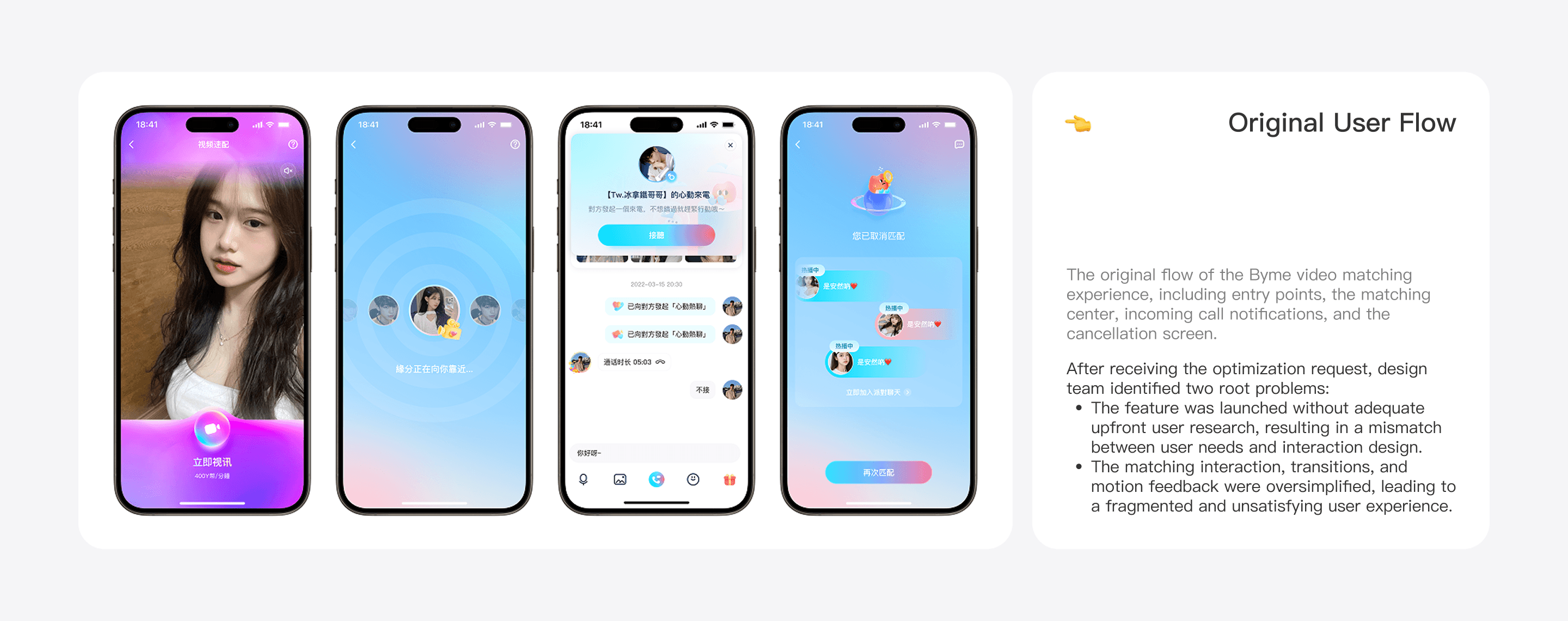
Within 7 days of launch, the PM and DS teams noticed that the video matching feature was underperforming. The 10-second abandon rate reached 32%, the match flow completion rate remained below 50%, and the feature’s revenue contribution. Our design team was brought in to identify friction points and lead experience-level optimizations.
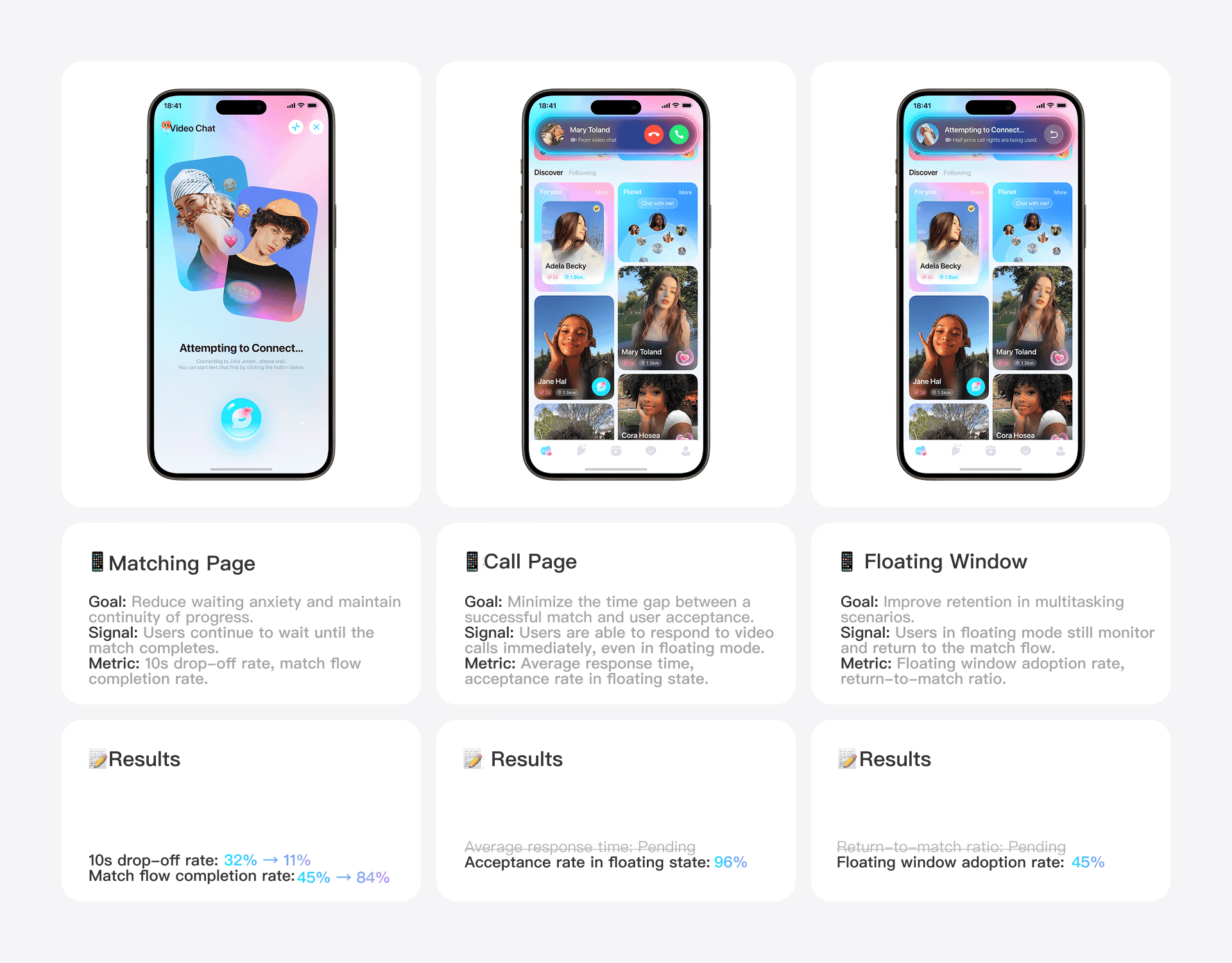
10s Drop-off Rate: Number of users who quit after 10s wait / Total users who initiated the matching flow × 100% (measured daily)
Match Completion Rate: Number of successful connections / Total users who initiated the matching flow × 100% (measured daily)
Research Plan
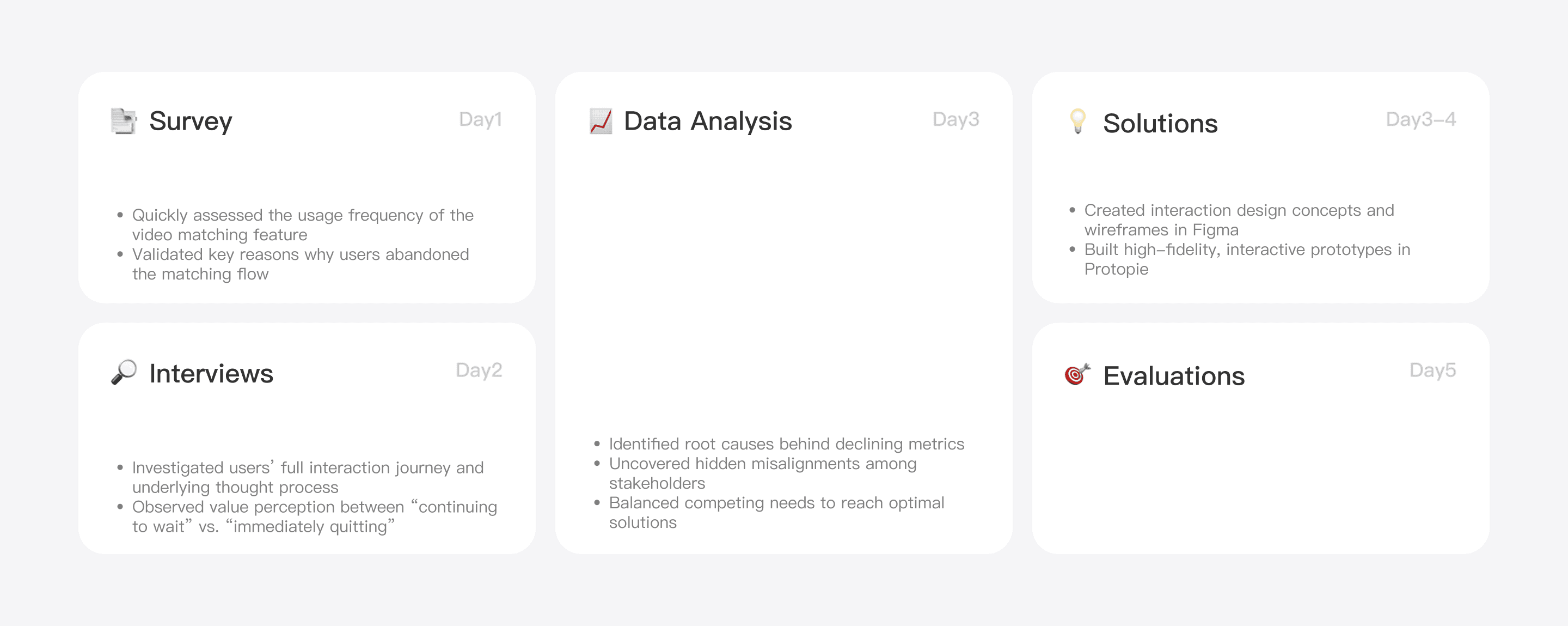
After clarifying the problem context, I set up a 5-day sprint plan (3 days dedicated to user research and 2 days to ideation and solution design).
The diagram below outlines our research framework, which included surveys, user interviews, data analysis, and the definition of experience metrics.
Survey
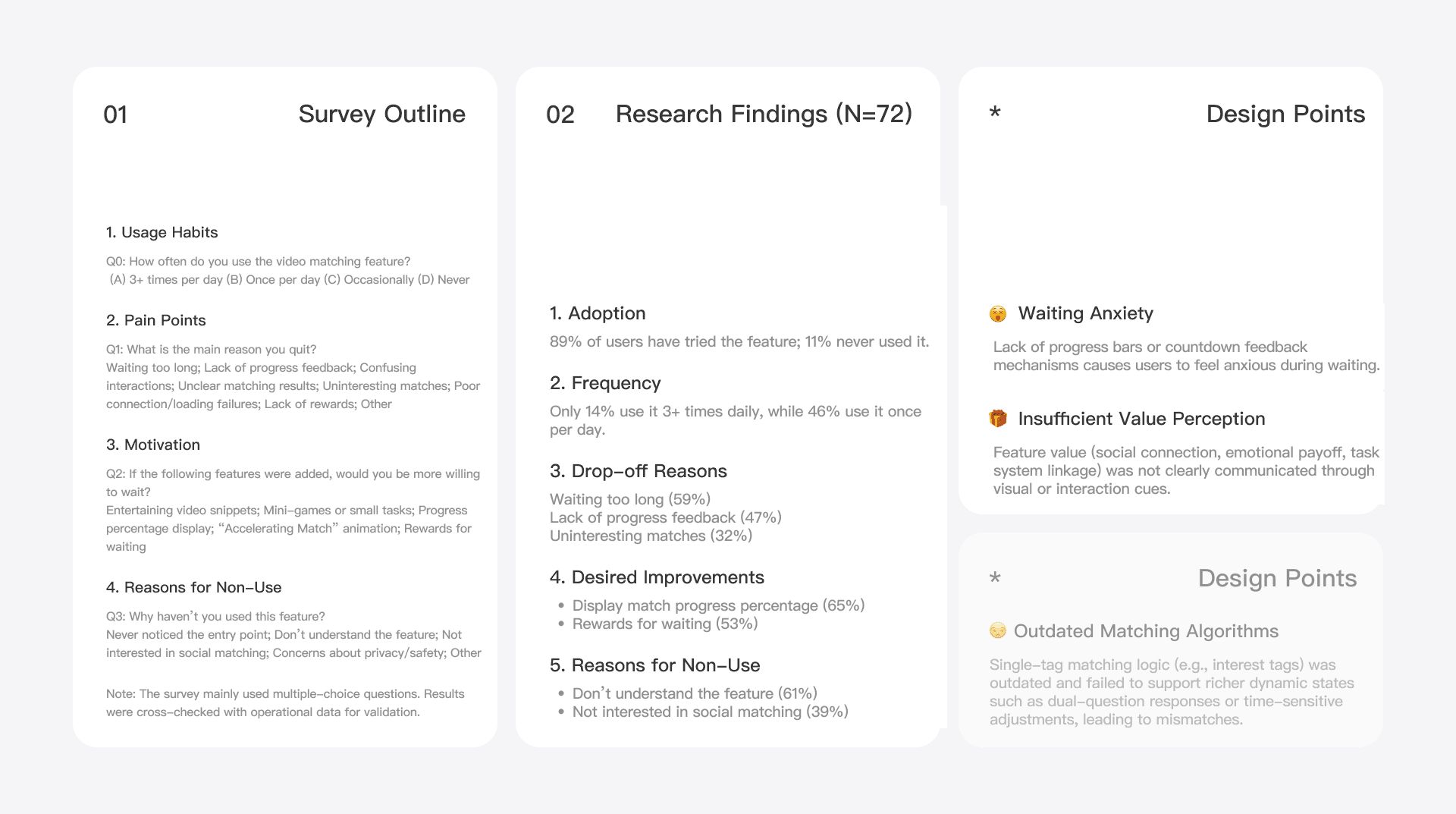
For efficiency, I first conducted internal qualitative analysis, then distilled potential factors impacting the metrics into a survey, which was distributed to target users for validation.
The conclusion: 😵 waiting anxiety and 🎁 insufficient value perception were the direct reasons users abandoned the flow, and thus became actionable levers for experience design.
Initially, based on the data, I assumed that long wait times were the primary pain point. However, after further discussion with the PM, I realized that since the platform was still in its early stage with limited supply of streamers, long wait times were inevitable. Forcing shorter waits would risk low-quality matches and hurt retention.
Balancing these trade-offs, I reframed the challenge: Design around perceived efficiency (controllable) instead of optimizing for algorithmic efficiency (uncontrollable)
Interview
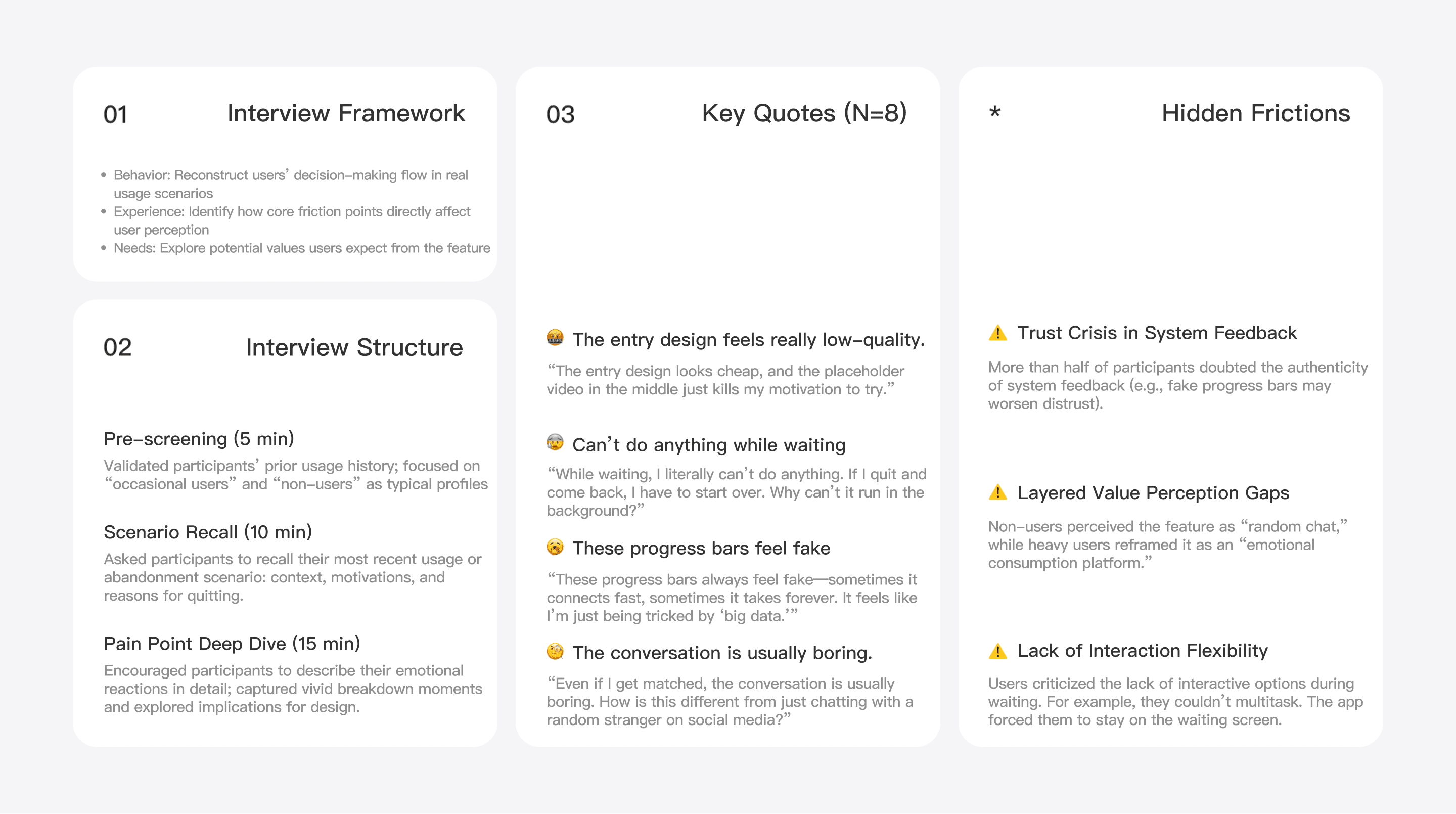
To further unpack the survey findings around “waiting anxiety” and “insufficient value perception,” I conducted user interviews focusing on decision-making psychology and contextual behaviors. The research revealed three underlying tensions:
1. Trust crisis in system feedback (e.g., misleading progress bars can actually heighten skepticism)
2. Layered value perception gaps (heavy users and light users hold inconsistent understandings of the feature’s value)
3. Lack of interaction flexibility (no meaningful actions during the wait, nor the option to run the process in the background)
Debate
Finally, we defined experience metrics based on Google’s GSM model and collaborated with product and engineering teams to implement tracking points, ensuring the design impact could be validated.
Below is the execution process along with the final performance outcomes.
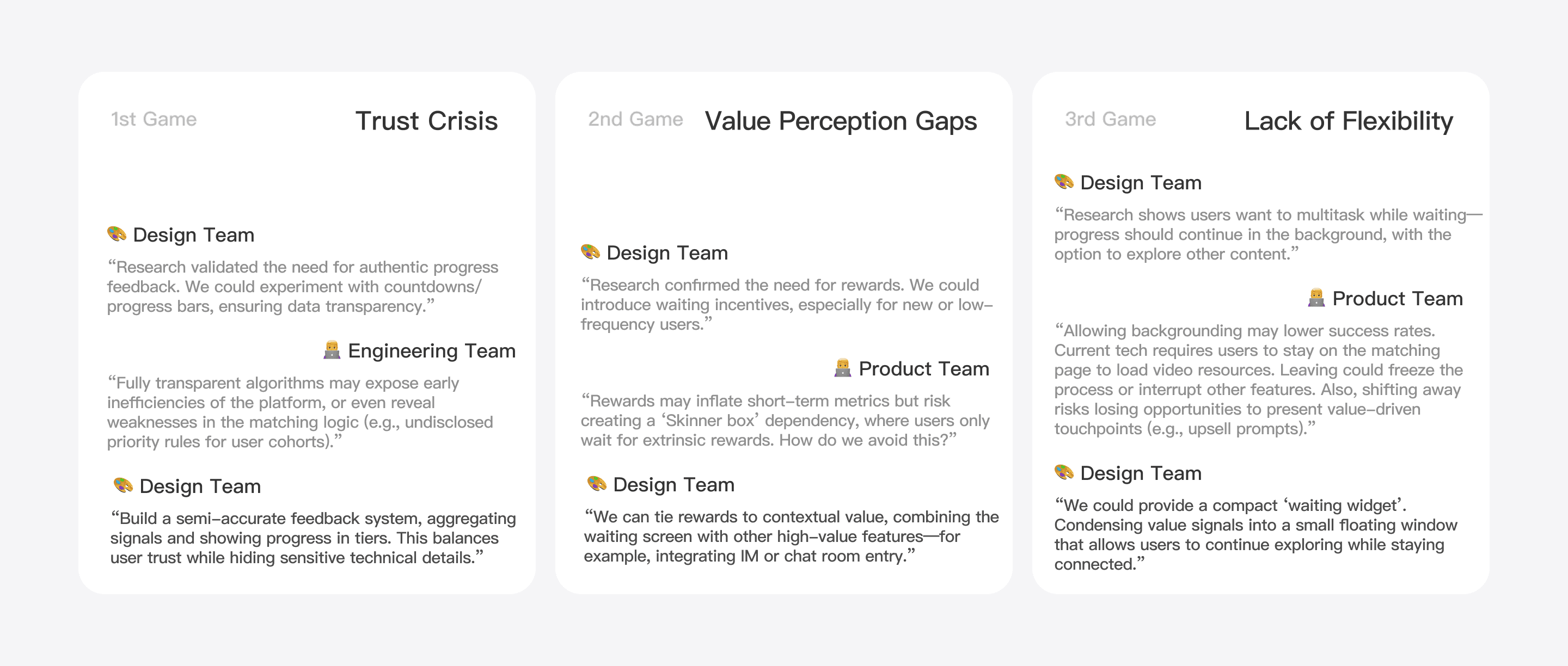
1st Design Iteration
Based on the outcomes of these trade-offs, I developed an initial solution.
Next, you’ll see how the UX/UI design directly addresses the three challenges identified earlier, followed by a preview of the actual motion prototypes.
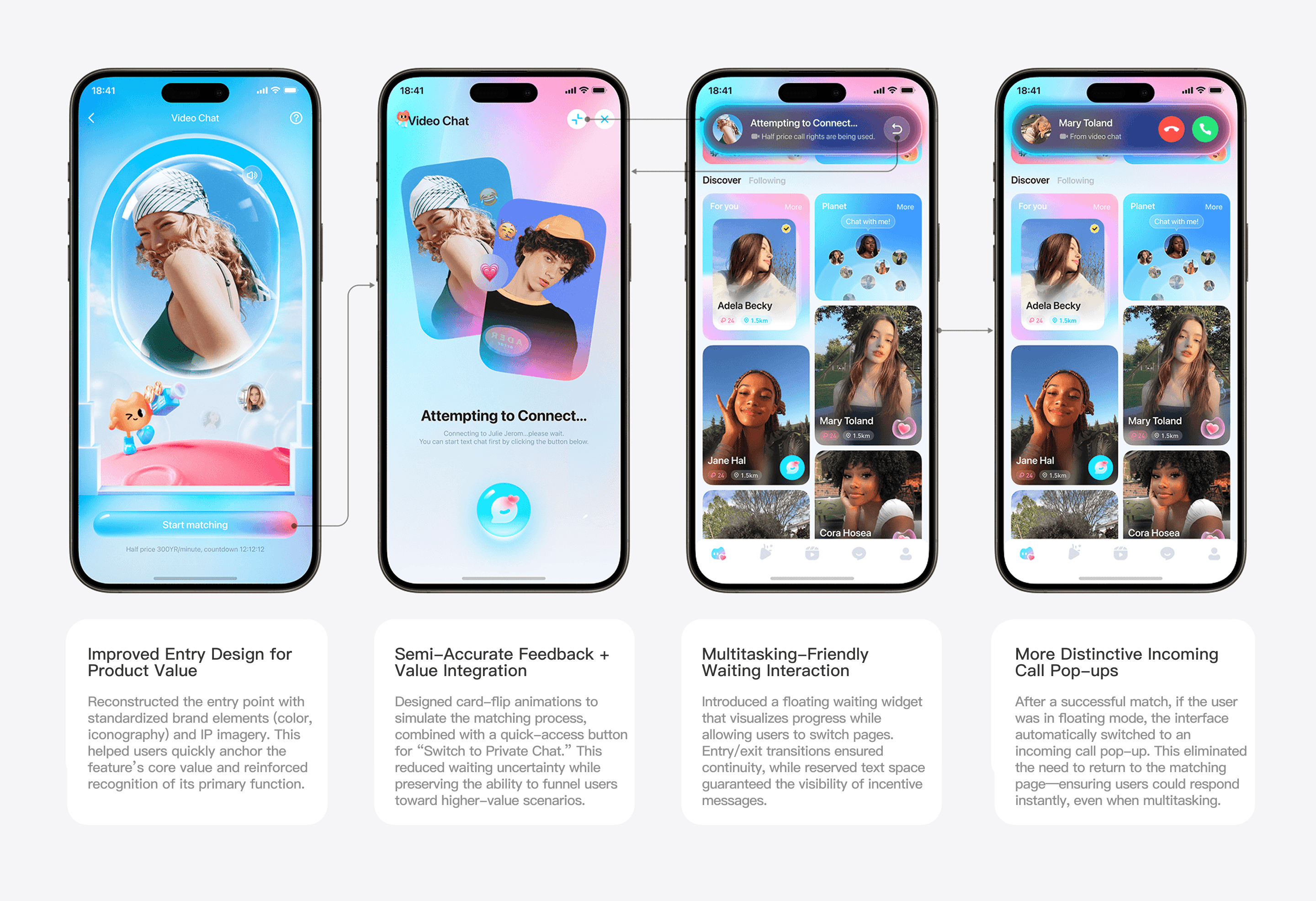
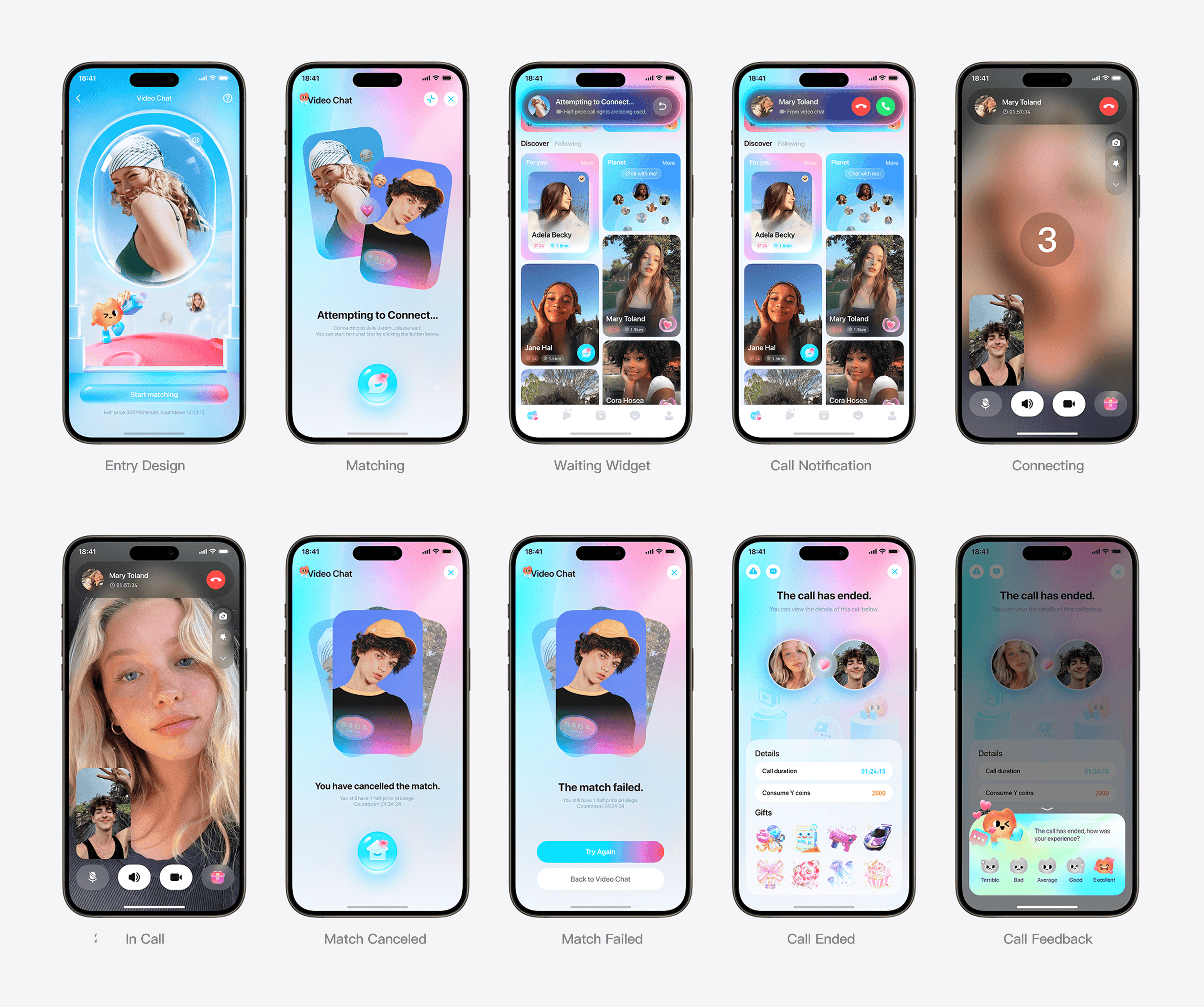
2nd Design Iteration
After the design review, I set the focus of the second iteration on completing missing flows and states, as well as refining UI details.
For example, we optimized the UI of the cancellation page, video call interface, and call-end screen to ensure a more consistent and polished visual style across the entire experience.
Design Metrix
Finally, we defined experience metrics based on Google’s GSM model and collaborated with product and engineering teams to implement tracking points, ensuring the design impact could be validated.
Below is the execution process along with the final performance outcomes.
Future Plan
After the feature optimizations went live, Phase II of the video matching experience achieved the expected growth in key metrics.
Phase III may focus on deeply integrating video and voice matching features, in response to increasing diversification and complexity of user scenarios.
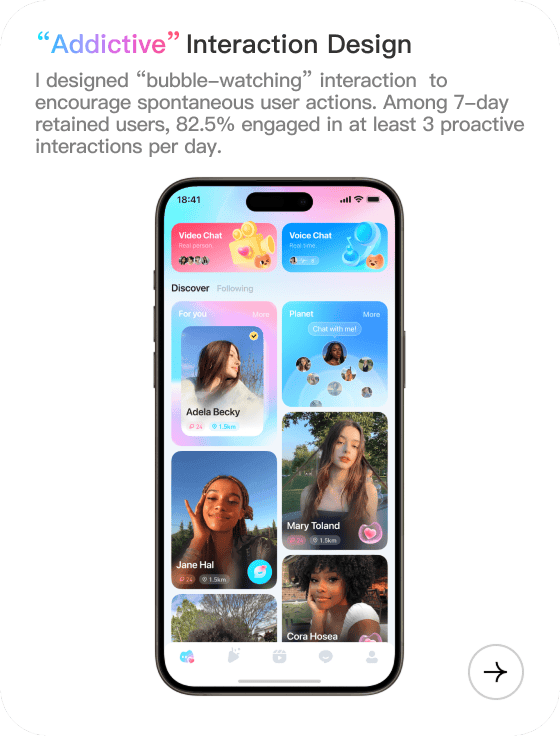
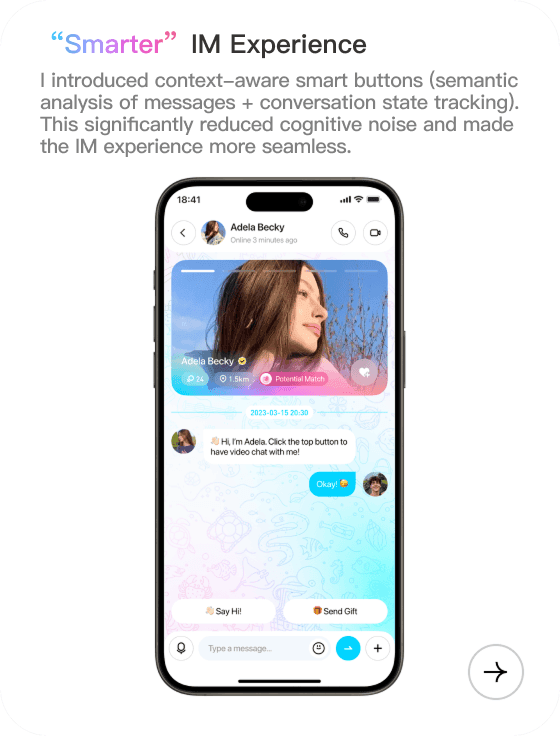
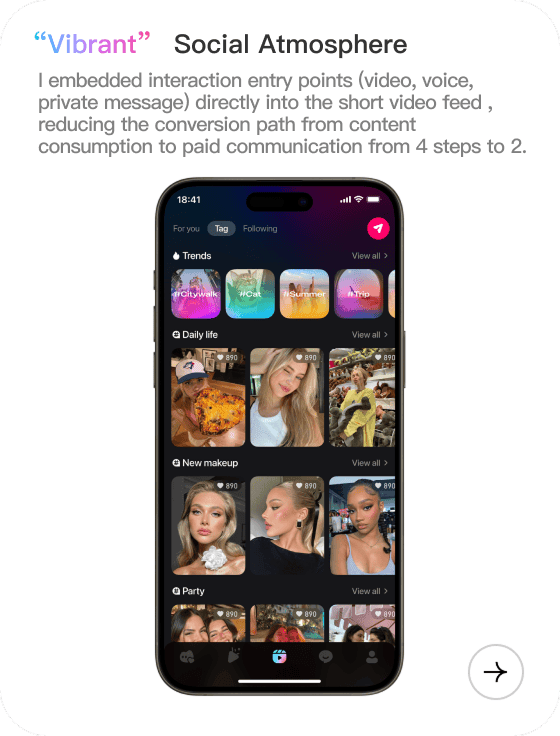
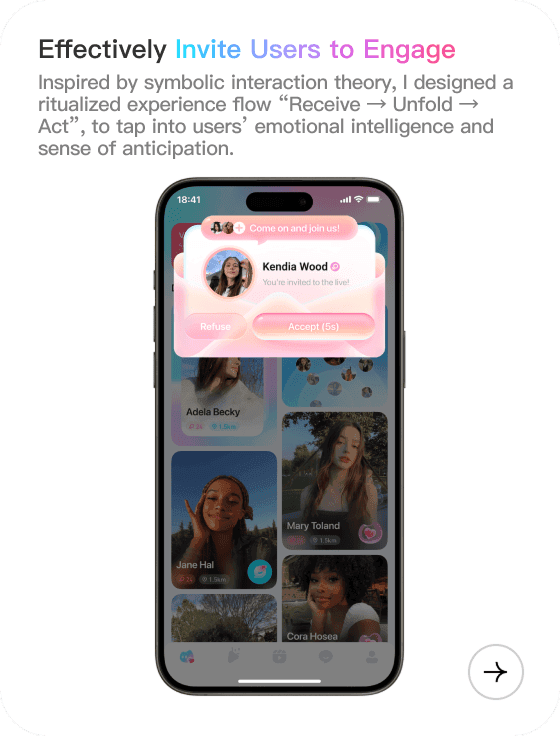
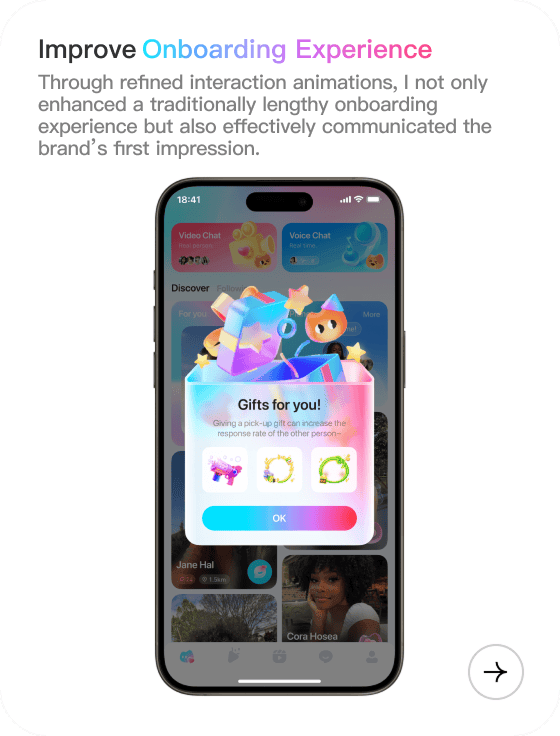
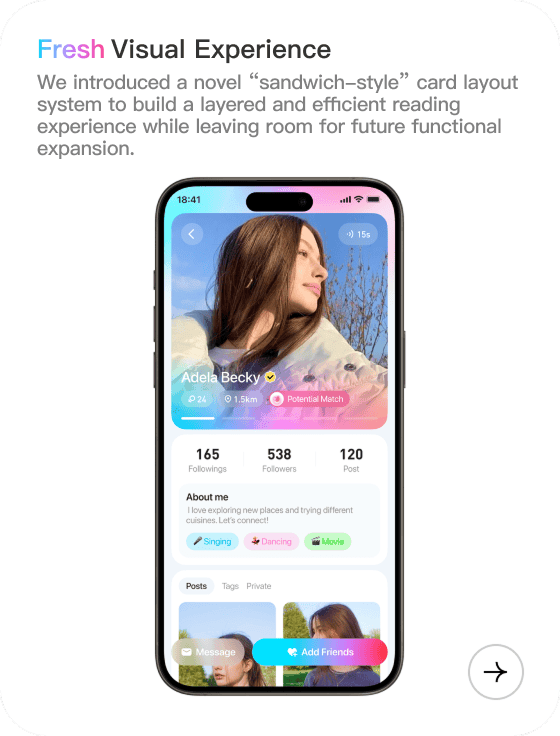
Additionally, you can explore more of my design work on Byme by expanding the cards below for a quick design overview.
Reflection
There’s never just one way to solve a problem—product design, user experience, visuals, operations, and technology are all different levers we can pull. None of them is inherently “better”, what truly matters is the ROI each path brings.
Sometimes, the solution isn’t just about what we design for users, but how we let users themselves become part of the solution. For consumer products, the real challenge is often not fixing a single pain point, but shaping the core abilities and ecosystem so the product can grow naturally into something healthy and self-sustaining.
🎉 Thank you for Reading! View More Projects
✨ Create products that fuel thinking, spark creativity, and enrich everyday happiness!